

Blog

2026-08-04 14:26:47
laser engraving is an advanced manufacturing process that uses a focused laser beam to remove, modify, or mark the surface of a material. Unlike traditional engraving methods that rely on mechanical cutting tools, laser engraving uses controlled light energy to create precise patterns, text, logos, and detailed designs.
Because of its high accuracy, fast processing speed, and ability to work with various materials, laser engraving technology is widely used in industries such as electronics, automotive, aerospace, medical devices, jewelry, tooling, and product customization.
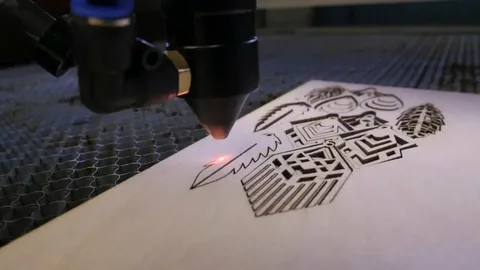
With the development of modern manufacturing, laser engraving has become an important solution for companies requiring permanent markings, fine details, and high-quality surface processing.
Laser engraving is a process where a high-powered laser beam is directed onto a material surface to remove a small amount of material and create a visible mark or design.
The laser energy generates heat that changes or vaporizes the surface layer of the material. By controlling parameters such as laser power, speed, and frequency, manufacturers can achieve different engraving depths and surface effects.
Common laser engraving results include:
Text
Numbers
Barcodes
QR codes
Logos
Decorative patterns
Identification marks
A laser engraving machine works by controlling a focused laser beam through a computer-controlled system.
The basic process includes several steps.
The engraving pattern is created using graphic design or CAD software.
The digital file contains information such as:
Shape
Size
Position
Engraving depth
The laser source produces a concentrated beam of light with high energy density.
Different materials require different laser types and settings.
The laser beam moves across the material surface according to programmed instructions.
The energy from the laser removes or modifies the material layer, creating the desired pattern.
After engraving, the finished surface is checked to ensure:
Clear markings
Accurate positioning
Consistent quality
Different laser technologies are used depending on the application and material.
CO2 laser engraving machines are commonly used for non-metal materials.
Applications include:
Wood
Acrylic
Leather
Glass
Plastic
Fiber laser engraving is widely used for metal processing because of its high precision and efficiency.
Common applications:
Stainless steel marking
Aluminum engraving
Electronic components
Industrial parts
UV laser engraving provides precise processing with minimal heat impact.
It is often used for:
Electronics
Semiconductor components
Precision products
Laser engraving can create extremely detailed patterns and small markings that are difficult to achieve with traditional methods.
Because there is no physical cutting tool touching the material, laser engraving reduces mechanical damage and tool wear.
Computer-controlled operation allows fast and repeatable engraving, making it suitable for both small batches and mass production.
Laser engraving creates durable marks that can withstand wear, temperature changes, and environmental conditions.
A single laser engraving system can process different designs without requiring custom tools or molds.
Laser engraving is used for:
Product identification
Serial numbers
Component marking
PCB-related applications
Applications include:
Engine components
Metal parts
VIN marking
Product traceability
Laser engraving helps create permanent identification marks on precision components.
Used for:
Surgical instruments
Medical equipment marking
Product tracking
Laser engraving can create:
Surface textures
Product logos
Precision markings
Although these terms are often used together, they are slightly different.
| Feature | Laser Engraving | Laser Marking |
|---|---|---|
| Material Removal | Yes | Usually No |
| Processing Depth | Deeper | Surface Level |
| Main Purpose | Creating physical grooves | Creating identification marks |
| Applications | Decoration, tooling | Tracking, labeling |
Several factors influence engraving results:
Higher power can create deeper engraving but may affect delicate materials.
The movement speed of the laser affects processing quality and efficiency.
Different materials require different laser parameters.
Higher resolution provides more detailed engraving results.
When selecting laser engraving equipment, manufacturers should consider:
Material type
Required engraving depth
Production volume
Processing accuracy
Automation requirements
Maintenance needs
Choosing the right machine configuration ensures stable performance and consistent results.
Laser engraving is used for creating permanent marks, designs, logos, and identification information on different materials.
Common materials include metals, plastics, wood, glass, acrylic, leather, and ceramics.
Yes. Laser engraving creates durable markings that are resistant to wear and environmental conditions.
Laser engraving removes material from the surface, while laser marking usually changes the surface appearance without significant material removal.
Laser engraving is a precise and efficient manufacturing technology that uses focused laser energy to create permanent surface designs and markings. With advantages such as high accuracy, flexibility, and low tool wear, laser engraving has become widely used across many industries.
As manufacturing continues moving toward higher precision and automation, laser engraving technology will remain an important solution for product identification, customization, and industrial processing.