

Blog

2026-06-30 18:00:16
In modern manufacturing, product complexity is increasing rapidly, especially in aerospace, medical devices, automotive components, and precision engineering. Traditional 3-axis machining is often no longer sufficient for parts with complex geometries and tight tolerances. This is where 5 axis CNC Machining becomes a game-changing solution.
Understanding the 5 Axis CNC Machining Advantages helps manufacturers choose the right production strategy for high-precision and high-efficiency machining projects.
5 axis CNC machining is an advanced manufacturing process where a cutting tool moves along five different axes simultaneously:
X axis (left-right movement)
Y axis (front-back movement)
Z axis (up-down movement)
A axis (rotation around X)
B or C axis (rotation around Y/Z)
This multi-directional movement allows the machine to reach complex surfaces in a single setup.
Compared with standard CNC machining, 5 axis machining reduces repositioning and improves accuracy.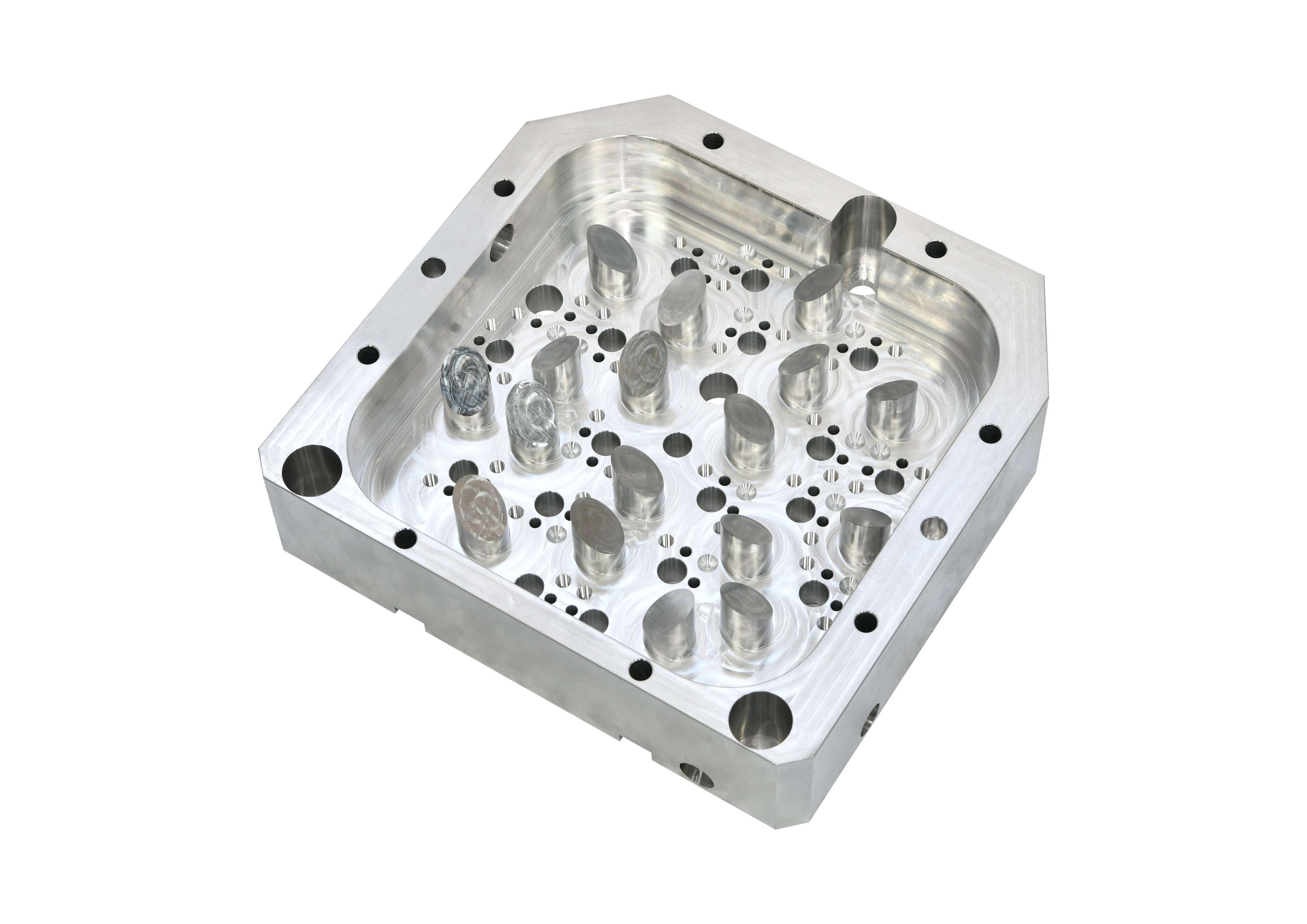
One of the biggest advantages of 5 axis CNC machining is its ability to produce highly complex shapes that are impossible or very difficult with 3-axis machines.
It is widely used for:
Aerospace turbine blades
Medical implants
Precision mold cavities
Automotive structural components
Traditional machining often requires multiple setups, which increases error risk.
With 5-axis systems:
Most parts can be completed in one setup
Reduced fixture changes
Lower human error risk
Faster production cycles
This significantly improves cnc machining service efficiency.
Because the tool can maintain optimal cutting angles at all times, 5 axis machining improves:
Surface finish quality
Dimensional accuracy
Tool engagement stability
This is especially important for industries requiring precision CNC machining.
In 5-axis machining, the tool can tilt toward the surface, allowing:
Shorter cutting tools
Reduced vibration
Lower tool wear
Improved machining stability
This directly reduces production cost over time.
By optimizing tool angles and cutting paths, 5 axis CNC machining can remove material more efficiently, especially for:
Deep cavities
Complex curved surfaces
Multi-angle parts
This makes it ideal for both prototype and production environments.
Industries that benefit most from 5 axis machining include:
Aerospace engineering
Medical device manufacturing
High-end automotive components
Precision mold making
Energy and turbine systems
These industries require both accuracy and structural complexity.
| Feature | 3 Axis CNC | 5 Axis CNC |
|---|---|---|
| Setup time | Multiple setups | Single setup |
| Complexity | Limited | Very high |
| Precision | Medium | High |
| Surface quality | Standard | Excellent |
| Cost efficiency | Lower initial cost | Higher productivity |
While 3-axis machines are still widely used, 5 axis cnc machining services are increasingly preferred for complex and high-value parts.
As product designs become more compact and geometry-driven, manufacturers need solutions that reduce production steps while improving precision.
5 axis CNC machining advantages include:
Faster production cycles
Higher design freedom
Better surface finish
Lower assembly errors
Improved consistency in batch production
This makes it a core technology in modern CNC machining service systems.
MINGNON provides advanced CNC machining services, including 3-axis, 4-axis, and 5 axis CNC machining solutions for global industries.
Capabilities include:
Precision CNC machining
Rapid prototyping
Low-volume production
Complex part manufacturing
Engineering support from design to production
The 5 Axis CNC Machining Advantages are clear: higher precision, fewer setups, better surface quality, and the ability to produce highly complex geometries efficiently.
As industries continue to demand more advanced components, 5 axis machining is becoming the standard for high-end CNC machining service providers worldwide.